SB 721 & SB 326 Compliance in Southern California (2026): What Property Managers & HOAs Must Do Now
SB 721 (Jan 1, 2026 Deadline) & SB 326 (Ongoing 9-Year Mandate) Elevated Exterior Element (EEE) Compliance in Southern California

ADCO Roofing and Waterproofing. Serving Los Angeles County, Riverside County, San Bernardino County, Orange County, and Ventura County
Contact ADCO Today

California’s elevated exterior element laws — SB 721 and SB 326 — are now actively shaping how apartment owners and HOA boards manage risk, budget repairs, and maintain insurance coverage across Southern California.
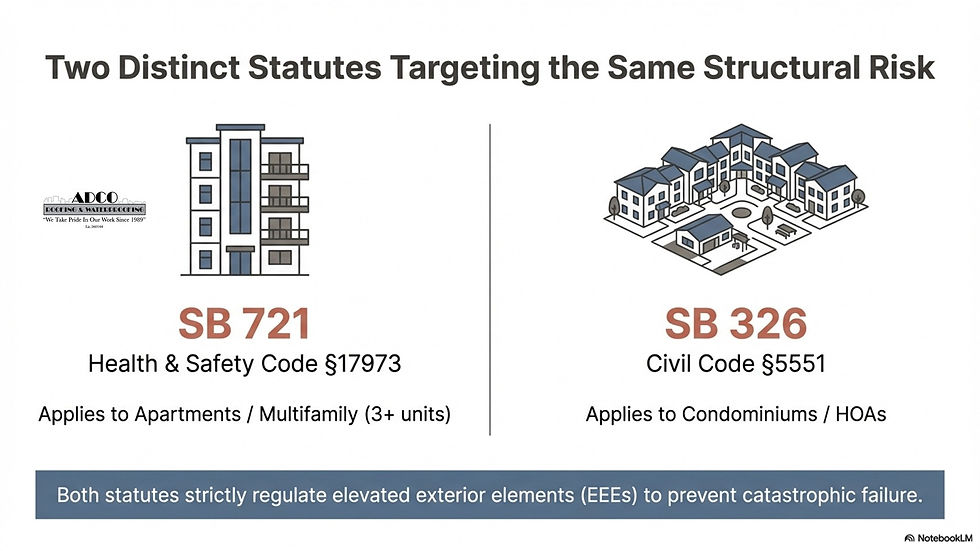
While both laws address the same structural vulnerability, they operate under different statutes and deadlines. Understanding the distinction is critical.
Statutory Deadline Clarification
SB 721 (Multifamily / Apartments) Initial inspection deadline: January 1, 2026
SB 326 (HOAs / Condominiums) Initial inspection deadline: January 1, 2025 (now passed) Ongoing inspection cycle: Every 9 years
SB 326 associations are now in the enforcement, repair, and reserve-planning phase.
SB 721 multifamily owners face a hard inspection deadline of January 1, 2026.
What Is SB 721?

California Health & Safety Code §17973
SB 721 applies to:
Apartment buildings
Multifamily rental properties
Structures with three (3) or more dwelling units
It requires inspection of Exterior Elevated Elements (EEE), including:
Balconies
Decks
Walkways
Stair systems
Catwalks
Railings
If those elements:
Rely in whole or in part on wood framing, and
Extend beyond the exterior walls of the building.
Inspections must be performed by a licensed architect, structural engineer, or qualified professional as defined by statute.
Repair Timelines

If an inspection identifies:
Immediate life-safety hazards → Immediate corrective action required
Other safety risks → Permit application generally required within 120 days of report
Repairs typically required within 120 days of permit approval (unless extended by the building department)
Documentation must be maintained.
For multifamily properties in Los Angeles, Anaheim, Riverside, Ontario, or San Bernardino, this January 1, 2026 deadline is a statutory compliance requirement — not a recommendation.
What Is SB 326?

California Civil Code §5551
SB 326 applies to:
Condominium associations (HOAs)
Common interest developments
It requires inspection of load-bearing exterior elevated elements that rely on waterproofing for structural integrity.
The inspection must:
Be completed by a licensed architect or structural engineer
Identify immediate safety threats
Document remaining useful life
Be incorporated into the association’s reserve study
Inspections must occur every nine (9) years.
Important Distinction

Unlike SB 721, SB 326 does not contain the same statutory 120-day permit and repair clock. Repair timelines are determined by the severity of findings and the association’s governance and budgeting process.
However, immediate life-safety issues must still be addressed without delay.
Southern California Enforcement & Insurance Pressure

Across:
Los Angeles
Glendale
Pasadena
Burbank
Santa Monica
Long Beach
Anaheim
Riverside
Ontario
San Bernardino
Ventura
Municipal building departments and insurance carriers are increasingly requesting:
Proof of SB 721 inspection compliance
Proof of SB 326 inspection completion
Repair documentation
Evidence of corrective action
Compliance is now directly tied to underwriting decisions and liability exposure.
Why Roofing & Waterproofing Matter in SB 721 / SB 326 Compliance

Structural engineers identify the condition of elevated exterior elements. Waterproofing execution often determines whether those elements pass or fail inspection.
In Southern California multifamily portfolios, the most common deficiencies involve:
Failed waterproofing membranes
Improper flashing details
Deteriorated balcony traffic coatings
Ponding water at elevated walkways
Inadequate drainage
Long-term moisture intrusion leading to wood rot
Carport substrate decay
Many compliance failures originate from moisture management — not structural design flaws.
Proper roofing-to-balcony integration and drainage control frequently determine whether a property requires localized repair or full structural reconstruction.
How SB 721 & SB 326 Intersect with Roof Systems

Property managers often overlook the systemic relationship between:
Roof drainage
Balcony waterproofing
Parapet transitions
Carport roofing
Exterior stair landings
Podium decks
Poor roof drainage accelerates balcony deterioration. Improper tie-ins allow moisture migration behind coatings and membranes.
A compliance-ready evaluation must include:
Roofing transitions
Flashing integration
Deck coating condition
Drainage capacity
Waterproofing continuity
Coordination between engineer and roofing/waterproofing contractor is essential.
Common Elevated Exterior Element Violations in Southern California
Across Los Angeles County, Riverside County, Orange County, and the Inland Empire, frequent issues include:
Cracked or delaminated traffic coatings
Exposed wood framing
Rusted metal flashing
Improper balcony slope
Failed sealants at door thresholds
Water intrusion beneath TPO or modified bitumen tie-ins
Carport wood decay
These are recurring conditions in properties built between 1985 and 2005.
2026–2028 Compliance Strategy for Multifamily & HOA Properties

If you manage properties in Southern California, your plan should include:
Confirm inspection status (SB 721 or SB 326)
Identify elevated exterior elements requiring repair
Coordinate roofing evaluation alongside balcony inspection
Budget phased corrective work
Maintain a documented compliance file
Delays increase:
Liability exposure
Insurance renewal risk
Emergency repair costs
Civil penalty exposure
SB 721 & SB 326 Repair Contractor in Southern California


ADCO Roofing & Waterproofing, based in North Hollywood, serves:
Los Angeles County
Riverside County
San Bernardino County
Orange County
Ventura County
We specialize in:
Balcony waterproofing systems
Elevated walkway traffic coatings
Carport roof systems
Roofing-to-balcony tie-in detailing
Waterproofing system restoration
Coordination with licensed engineers
Compliance-ready documentation support
Our role is to ensure repairs:
Meet code requirements
Integrate properly with structural recommendations
Reduce recurring deficiencies
Support future inspection compliance
Is Your Southern California Property Compliant?

If you manage apartment communities or HOAs in:
Los Angeles, Pasadena, Glendale, Burbank, Santa Monica, Long Beach, Anaheim, Riverside, Ontario, San Bernardino, Ventura, or surrounding areas — now is the time to confirm compliance status.
SB 721 inspection deadline: January 1, 2026SB 326 associations are already in the post-deadline enforcement phase
Schedule a compliance evaluation to assess waterproofing, drainage, and elevated exterior element conditions.
Contact: sales@adcoroofing.com

Contact ADCO Today

Legal Notice
Summary based on California Health & Safety Code §17973 and Civil Code §5551. Property owners and associations should consult legal counsel for statutory interpretation.
Comments